
學歷 Education
| Duration | University | Degree |
|---|---|---|
| 2011/09 – 2016/07 | Graduate Institute of Biomedical Sciences, Chang Gung University, Taoyuan, Taiwan | Ph.D. |
| 2007/09 – 2009/07 | Graduate Institute of Basic Medical Sciences, Chang Gung University, Taoyuan, Taiwan | B.Sc |
經歷 Professional Experience
| Duration | Institution | Department | Position |
|---|---|---|---|
| 2026/08 – present | National Yang Ming Chiao Tung University, Taiwan | Department & Institute of Physiology | Assistant Professor |
| 2021/10 –2026/07 | Taipei Medical University, Taiwan | Graduate Institute of Metabolism and Obesity Sciences | Assistant Professor |
| 2024/05 –2026/04 | Chinese Physiological Society, Taiwan | Secretary-General | |
| 2022/05 –2024/04 | Chinese Physiological Society, Taiwan | Executive Secretary | |
| 2018, 2019 | Ulm University, Germany | Institute of Neurobiology & Institute of Comparative Molecular Endocrinology | Visiting Scholar |
| 2016/08 –2021/10 | Chang Gung University, Taiwan | Graduate Institute of Biomedical Sciences | Postdoctoral Fellow |
代表著作 Selected Publications
| Item | Publication Title |
|---|---|
| 1 | Academic hub: https://scholar.nycu.edu.tw/zh/persons/Ya-Tin Lin |
| 2 | Lin, Y.T.*, Wu, K.H., Jhang, J.J., Jhang, J.J., Yu, Z., Tsai, S.C., Chen, J.C., Hsu, P.H. and Li, H.U. (2024) Hypothalamic NPFFR2 attenuates central insulin signaling and its knockout diminishes metabolic dysfunction in mouse models of diabetes mellitus. Clinical Nutrition, 43:603-619. |
| 3 | Lin,Y.T.*, Chen, K.Y., Hsu, C.C., Liu, H.L., Jiang, Y.T., Ho, C.W., Chen, J.C., Li, H.Y., Weng, C.C., Hsu, P.H.* (2025) Stimulation of dorsal root ganglion with low-intensity focused ultrasound ameliorates pain responses through the GABA inhibitory pathway. Life Sciences, 361:123323. |
| 4 | Hsu, H.T., Hsu, C.C., Liao, Y.J, Li, H.Y., Chiang, Y.C. and Lin, Y.T.* (2025) Neuropeptide FF receptor 2 overexpression aggravates lipid accumulation and metabolic dysfunction in mice with diet-induced metabolic stress. Biomedical Journal, 12:100913. |
| 5 | Hsu, H.T., Hsu, C.C., Tsai, S.C., Chen, J.C., Li, H.Y and Lin, Y.T.* (2025) NPFFR2 deletion improves hypothalamic insulin sensitivity and metabolic outcomes in mice with diet-induced obesity. Endocrinology, 166(12):bqaf157. |
| 6 | Yu, Zachary, Lin, Y.T. and Chen, J.C.* (2021) Knockout of NPFFR2 prevents LPS-induced depressive-like responses in mice, International Journal of Molecular Sciences, 22,7611. |
五年內執行計畫
| 排序編號 | 年度 | 計畫名稱 | 單位 | 計畫期間 |
|---|---|---|---|---|
| 2025 | Mechanisms of Neuropeptide FF Receptor type 2-induced neuroinflammation in hypothalamus leading to central insulin resistance. | 國家科學及技術委員會 | 2025/08/01~2028/07/31 | |
| 2024 | Exploring the role and mechanisms of neuropeptide FF in obesity and central palmitate-induced neuroinflammation, adiposity signals resistance and metabolic dysregulation. | 國家科學及技術委員會 | 2024/03/01~2025/07/31 | |
| 2021 | The role of NPFF/NPFFR2 on the modulation of metabolic health: from central to peripheral system. | 國家科學及技術委員會 | 2021/08/01~2024/07/31 |
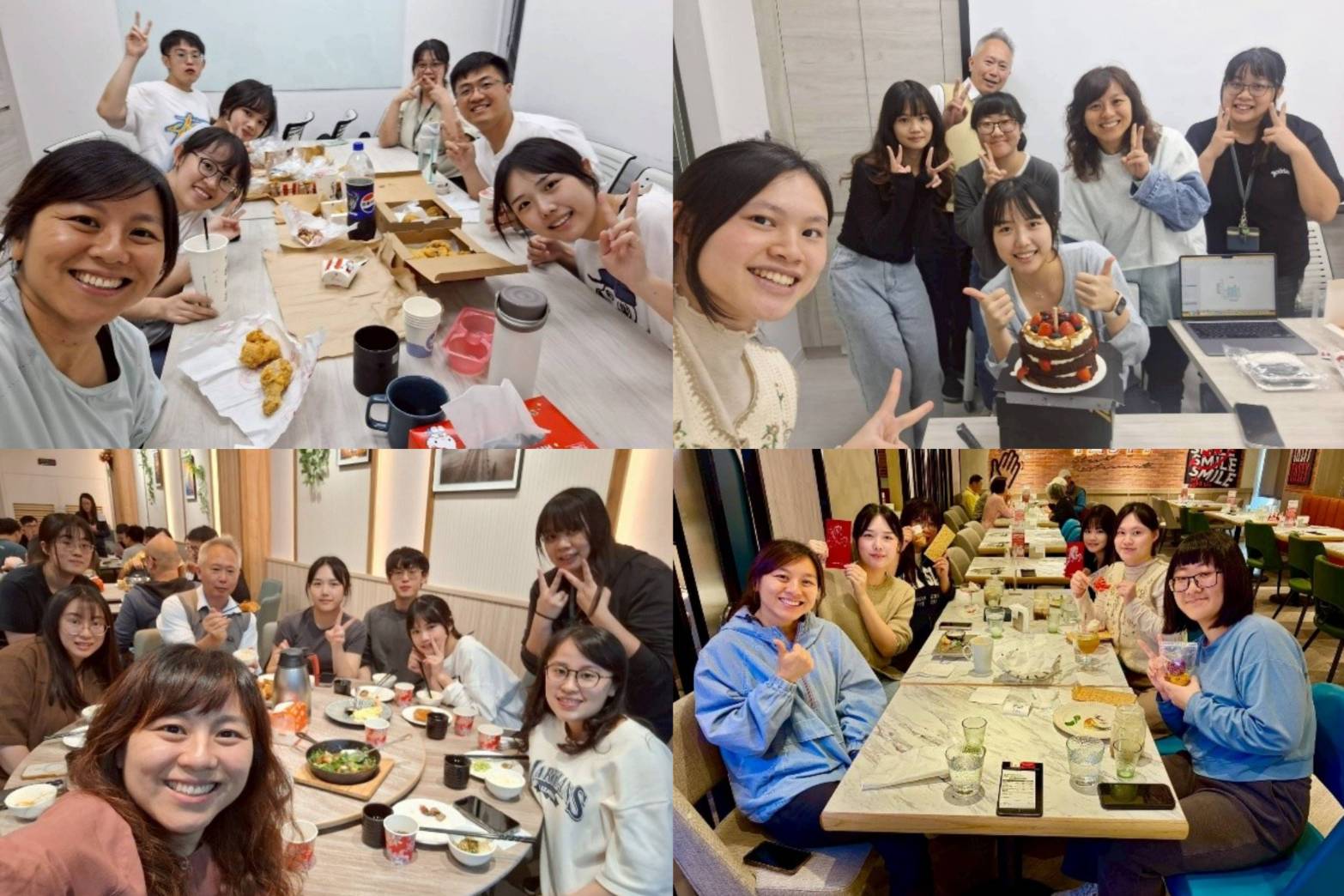
實驗室成員 Lab Members
| 職稱/學位 | 姓名 |
|---|---|
| 碩士生 | 唐敏薇、陳芊伃 |
| 博士生 | |
| 研究助理 | 蔡思綺 |
| 畢業生(博) | |
| 畢業生(碩) | 廖允柔、賴苡捷、莊昀庭 |
實驗室活動 Lab Photo

研究方向 Research Interest
Central-Control Metabolic Disorders
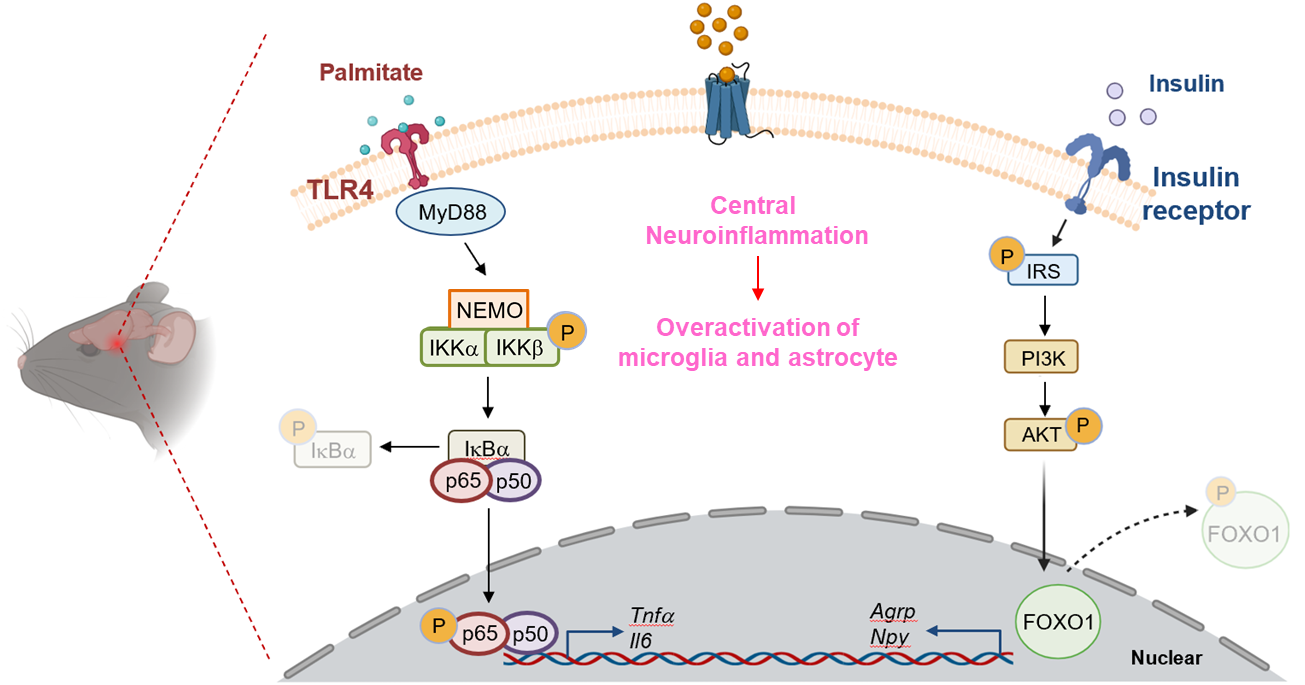
Metabolic disorders represent a major challenge in modern society, recognized as chronic conditions linked to numerous health complications and substantial socioeconomic burdens. Insulin resistance, a pivotal driver of metabolic dysregulation, is strongly associated with neuroinflammation in the CNS, particularly in the hypothalamus. Recent advancements in understanding role of neuropeptide FF (NPFF) in energy homeostasis have underscored the importance of NPFF signaling in metabolic regulation. Our previous studies revealed that NPFFR2 activation exacerbates central insulin resistance in mouse models of diabetes and obesity, highlighting its critical role in energy metabolism. Currently, we have demonstrated that NPFFR2 deletion alleviates lipopolysaccharide (LPS)-induced central inflammation. In contrast, central neuroinflammation-induced gliosis was exacerbated in NPFFR2 overexpression mice. These findings provide insights into the mechanisms through which NPFFR2 signaling contributes to central insulin resistance.
To uncover the downstream mechanisms by which NPFFR2 activation drives central inflammation and hypothalamic insulin resistance, we have designed a series of targeted experiments. These experiments include examining the role of NPFFR2 activation in hypothalamic neuronal subtypes involved in the induction of neuroinflammation, particularly proopiomelanocortin (POMC)- and agouti-related protein (AgRP)-expressing neurons. We will also explore the involvement of activated microglia and astrocytes in NPFFR2-triggered hypothalamic neuroinflammation, focusing on potential cross-interactions between specific hypothalamic neurons and activated microglia/astrocytes. Concurrently, we are synthesizing and screening small molecules targeting NPFF receptors, followed by the pharmacological validation of NPFF-dependent regulation of obesity-induced neuroinflammation and central insulin resistance. Ultimately, this study aims to expand our understanding of energy metabolism and contribute to the development of innovative prevention strategies.
Focused Ultrasound-Mediated Analgesic Effect
The primary objective of this study is to advance the clinical translation of low-intensity focused ultrasound (LIFU) as a non-invasive neuromodulation technique for managing cervical neuropathic pain, with a specific focus on elucidating its underlying molecular mechanisms. Previously, we demonstrated that LIFU acts on the rat dorsal root ganglion (DRG) to activate gamma-aminobutyric acid (GABA)-ergic neurons. This activation subsequently downregulates the synthesis and release of the downstream nociceptive molecule, calcitonin gene-related peptide (CGRP), thereby alleviating chronic constriction injury (CCI)-induced neuropathic pain.
Satellite glial cells (SGCs) in the DRG play a critical role in modulating the DRG microenvironment and supporting sensory neurons, serving as crucial regulators of pain signaling pathways. Currently, our project focuses on the interactions between neurons and SGCs within pain signaling pathways, as well as the pivotal signaling molecule in this cross-talk, adenosine triphosphate (ATP). This includes investigating the function of mitochondria, the essential organelles responsible for generating and maintaining ATP. Through these approaches, we aim to investigate the cellular and molecular mechanisms by which LIFU modulates neuropathic pain.
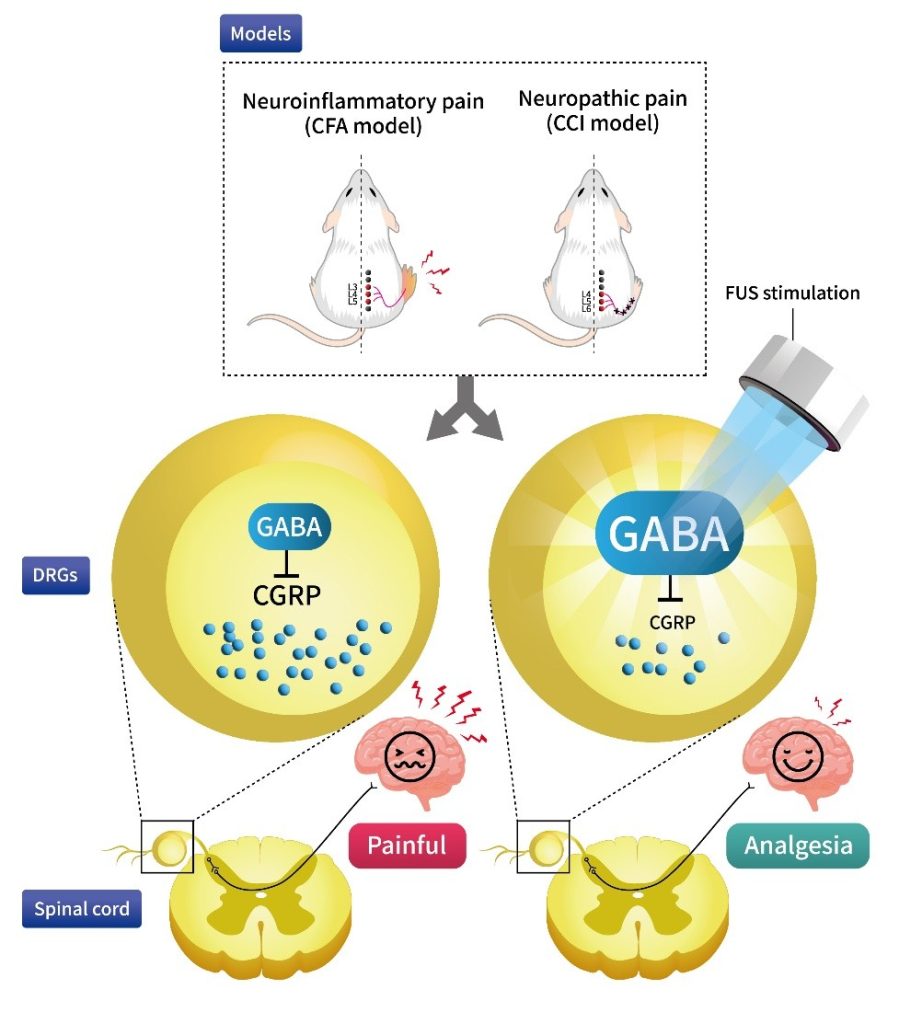
(Life Sciences, 2025)